Tracking: objects, signals, joints
Tracking without a detector
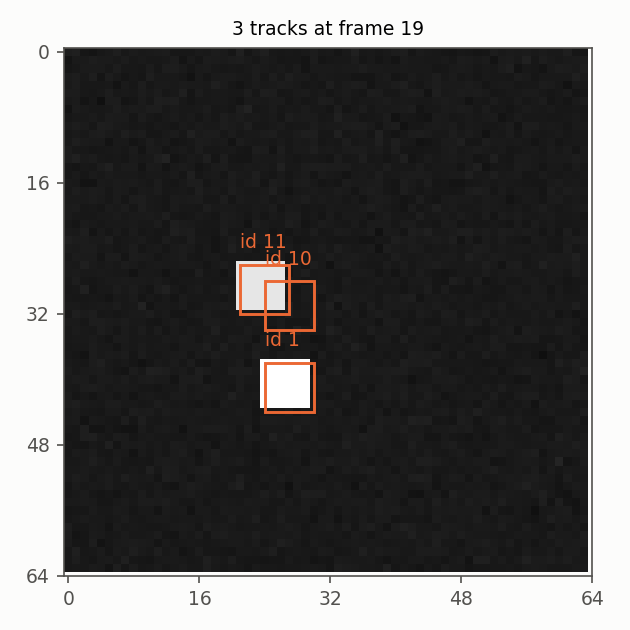
MovingObjectTracker
builds a running robust background, groups the changed pixels into
connected components, and follows every component with a Kalman filter.
The association is two-round, high confidence first and low confidence
second, the idea of ByteTrack. The same class accepts boxes from an
external detector with update(boxes).
Video to signal, joints to video
TrackToSignal and
FeatureToSignal turn a
track or a dict of features into a
Signal, so the drift detectors, the anomaly
detectors and the metrics of the library work on video without any new
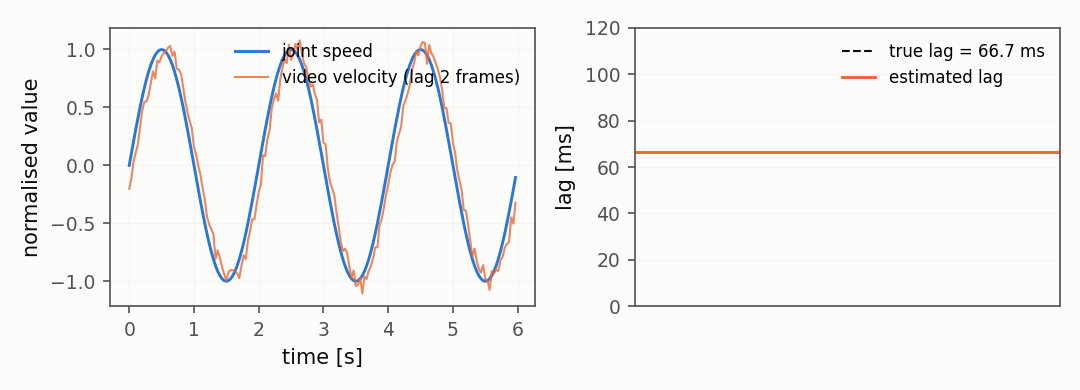
code. FrameJointFusion
aligns the video with the joint readings and estimates the latency of
the camera by correlating the motion in the video with the joint speed,
within the frame rate of the source.
API
On the 20-frame synthetic stream of this section the tracker reports three tracks instead of two: the second square is occluded for one frame and a new id is created. The detection is correct (two squares), the id is not stable across the occlusion. This is a limit of the tracker on a short stream, and a longer one with the same objects gives the same id.